24/7 Emergency Line Open
Claremont, CA · Tankless water heaters
Claremont Tankless Water Heater Repair, Installation and Descaling
A tankless unit heats water only while a tap is open, so when it misbehaves you notice at once: a shower that goes cold, an error code on the display or a rumble from the wall. The causes are different from a tank heater, and a plumber who treats it like a tank will chase the wrong part.
Most of the trouble traces to a short list of things: scale on the heat exchanger, a blocked inlet screen, a venting or gas supply limit, or a sensor that has failed. Dispatch can tell you which are worth checking before a visit.
- Licensed and insured plumbers
- Same-day service when available
- 24/7 emergency dispatch
Tankless repair and troubleshooting: reading the symptoms
Tankless heaters announce faults with codes, and the code points to a system rather than a part. A flame or ignition code suggests a gas supply, igniter or flame rod problem. A temperature or overheat code often means scale or a flow restriction. A cold water sandwich, where hot water turns cold and returns, points to a short run of low flow, the way the unit modulates or a mixed supply from the fixture.
| Symptom | Likely area | What the plumber checks |
|---|---|---|
| Error code on the display | Ignition, venting, flow or a sensor | The code against the manual, the supply and the vent |
| Hot water turns lukewarm | Scale on the heat exchanger, or low flow | Flow rate, inlet screen and the heat exchanger |
| Unit shuts off while running | Overheat, a weak gas supply or blocked exhaust | Gas pressure, vent run and temperature sensors |
| Rumbling or kettle noise | Scale inside the exchanger | Descaling and the water flow path |
| Water at the base of the unit | A loose fitting, a failed valve or a cracked exchanger | Each connection and the service valves |
Do not reset the unit over and over. Repeated resets can hide a problem that builds heat in the exchanger, and a unit that locks out has done so for a reason. Write the code down, note when the problem started, and mention any recent work on the gas line or the venting when you call.
Flushing, descaling and maintenance in hard water
Golden State Water's 2026 report for the Claremont system gives average hardness as close to 190 milligrams per liter, a little over 11 grains, with readings across the system running between 97 and 330. A tankless heat exchanger has narrow channels, and mineral scale narrows them further each time water is heated. The result is less flow, higher temperatures inside the exchanger and eventually a shutdown or a failed part.
Descaling is the routine fix. The plumber closes the isolation valves, connects a pump and a bucket to the service ports, and circulates a descaling solution through the exchanger, then flushes it clean. How often depends on the water and how heavily the unit is used. A set of service valves makes the job quick, and a unit installed without them is worth adding valves to the next time it is opened.
Routine tasks that protect the exchanger
- Clean the inlet screen. Grit from a recent line repair or a street project can clog it and reduce flow.
- Descale on a schedule. Annual descaling is a common starting point in hard water, and the plumber adjusts it to what the exchanger shows.
- Check the vent. A bird nest, lint or a loose joint in the exhaust run can trip a safety limit.
- Test the condensate drain. A condensing model sends acidic condensate to a drain, and a blocked line can stop the unit.
When scale keeps coming back
If the house has no softener, descaling will be a recurring job, and the plumber may bring up softener and filtration work as a way to slow the scale. That is a judgment about cost and benefit, not a requirement.
Tankless unit throwing a code?
Call dispatch with the model, the code and what the water is doing. A plumber serving your area picks it up from there.
Tankless installation: what the house must supply
A tankless unit trades a storage tank for a larger demand on the supply. A gas model usually needs a bigger gas line than a tank heater, because it fires at a high rate for a short time. An electric model can need a very large circuit, so the electrical panel is the first thing to read. Venting for gas units is different too, and the clearance to windows, doors and other openings is set by the manufacturer and the code.
The gas side of an installation is sized from the appliance input and the length of run, then pressure-tested. When the existing line is too small, the work moves into gas line repair, and the plumber explains the extra step and what it adds before you commit. A water heater installation also counts as permitted work in Claremont, so confirm the permit and inspection with the Building Division at (909) 399-5460.
- Read the model label and the manual for gas input or electrical load.
- Measure the existing line, the vent path and the wall space.
- Decide on the gas line size, the circuit or the vent changes needed.
- Install the unit, service valves, condensate drain and relief connections.
- Test flow at several fixtures, then record the settings and the permit inspection date.
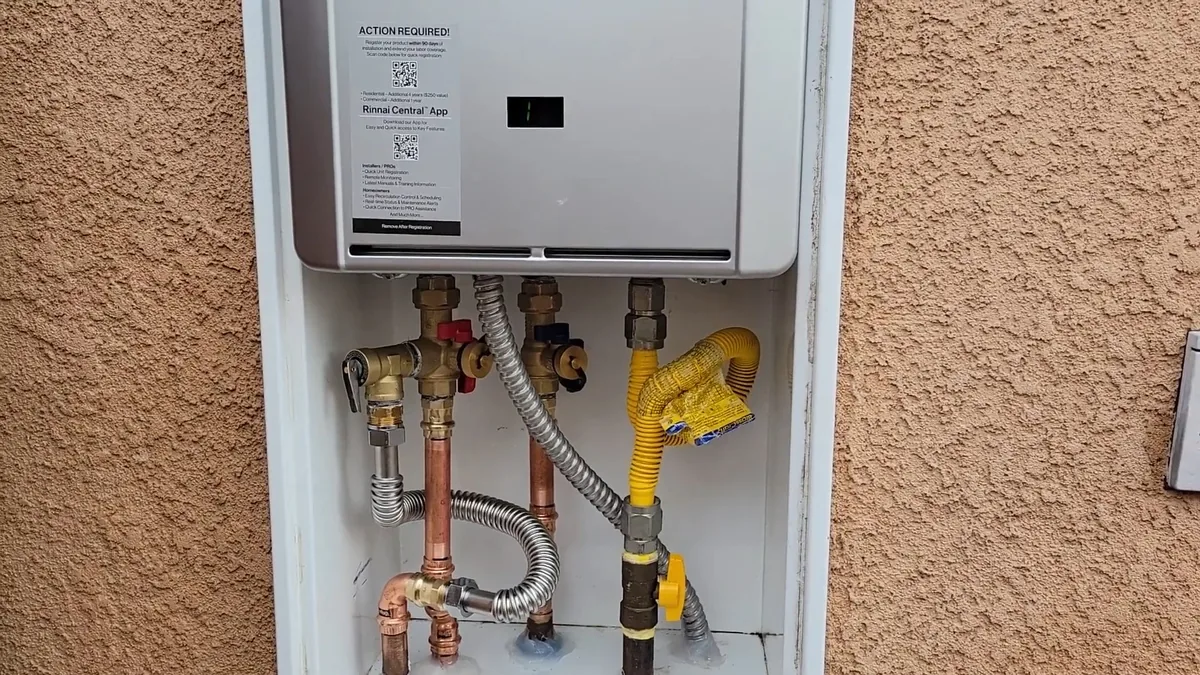
Replacing a tank with a tankless unit, and tankless against tank
Conversions are common and are worth thinking through. A tankless unit takes less floor space, and hot water does not run out during a long shower. It also needs a flow of at least a minimum number of gallons per minute to fire, and several fixtures running at once can ask more than a small unit can supply. A household that stacks showers and laundry should ask the plumber to size the unit against its peak demand.
| Question | Tank heater | Tankless heater |
|---|---|---|
| Space | A tall cylinder on the floor | A box on the wall |
| Hot water in a long run | Limited by the tank size | Continuous while the supply holds |
| Upkeep | Flush and check the anode | Descale and clean the screen |
| Fuel and supply needs | Standard gas or electric connection | Larger gas line or higher electrical load |
| If it fails | Often a full replacement | Often a part, a descale or a board |
If the old tank is already leaking, see the a new water heater page for the permit and bracing steps that apply to both types. Parts availability for a specific brand and model is worth asking about before you buy.
Thinking about going tankless?
Call now and reach dispatch for a plumber serving your area. Same-day service is offered when available.
Gas or electric, and the point-of-use alternative
Gas tankless models give more output for the supply they need, so they suit whole-house service. Electric tankless models tend to suit a single bathroom or a point-of-use job, because the circuit needed for a whole house is large. For a distant sink or a guest bath, a small electric unit under the cabinet can take the place of a long wait for hot water.
Gas models also need to breathe. They pull combustion air from the room or through a sealed vent, so a closet that is packed with storage can starve the burner. Electric models skip the venting question but make up for it in the size of the breaker and wire.
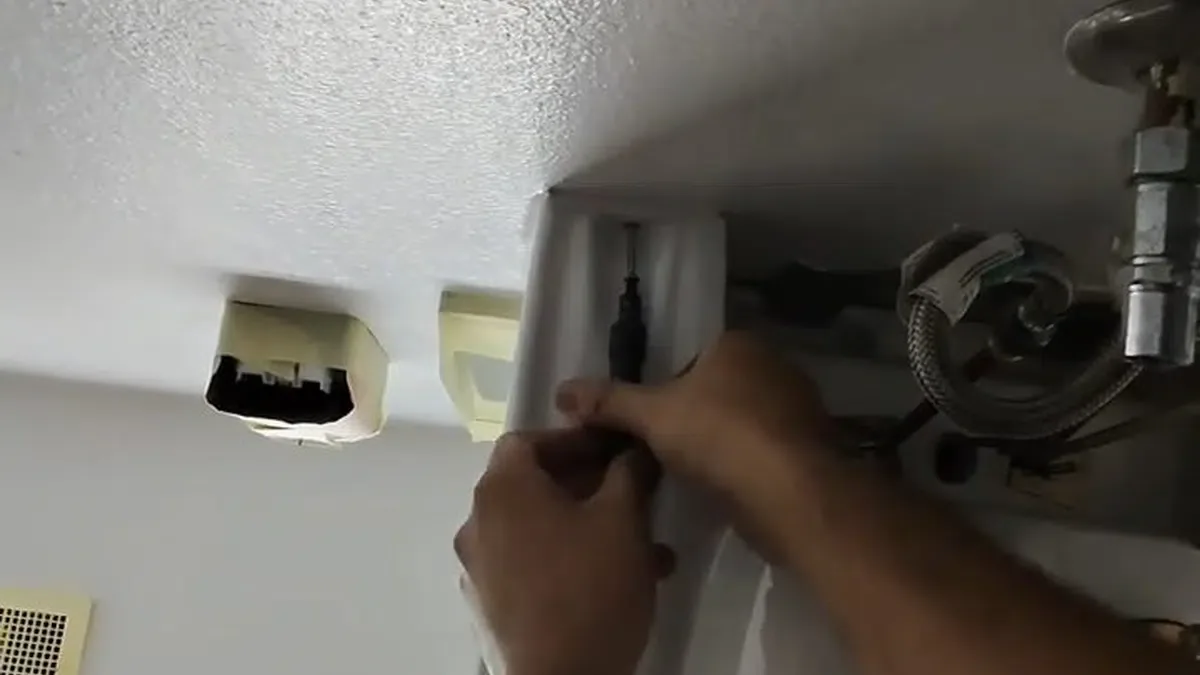
A recirculation pump is another option when the issue is the wait, not the supply. The plumber can tell you whether a pump, a small unit near the fixture or a rerouted line gives the shortest wait for the least change to the house.
Common questions about tankless water heaters
Why does my tankless unit make water lukewarm?
Scale in the heat exchanger or a clogged inlet screen is the usual cause, and a low flow rate at the fixture can prevent the burner from firing. A flush and a flow check sort out most cases.
Does a tankless heater need a flush?
Yes. Scale builds wherever water is heated, and the exchanger channels are narrow. Annual descaling is a common schedule in hard water.
Can the unit be installed outdoors?
Some models are made for outdoor use, and others must be indoors. The model label and the manual say which, and the plumber checks the clearances before setting it.
What does an error code mean?
Each maker uses its own code list, and the same number can mean different things between brands. Write down the model and code, and the plumber reads it against that maker's list.
Will my gas line be big enough?
Often it is not. A tankless unit draws more gas at once than a tank unit, so the plumber measures the run and sizes the line to the appliance.
Tankless heater trouble in Claremont?
Call now and reach dispatch for a licensed and insured plumber serving your area. Same-day service is offered when available.
- Licensed and insured plumbers
- Same-day service when available
- 24/7 emergency dispatch