
24/7 Emergency Line Open
Claremont, CA · Cost
What Decides the Cost of a Plumbing Job in Claremont
Every plumbing job in Claremont is priced after someone has seen the pipe, the heater or the drain. This page explains what a plumber weighs, service by service, so an estimate makes sense when you receive it.
It publishes no dollar ranges, because no local range could be tied to a source and a date.
- Licensed and insured plumbers
- Same-day service when available
- 24/7 emergency dispatch
Why this page shows no dollar ranges
A plumbing quote comes from what is found inside the wall, the floor or the pipe, and a number published before anyone has looked would be a guess. This page lists no dollar figures for another reason as well: each local range has to rest on a source and a retrieval date, and none of the pricing sources checked for Claremont met that bar. Pages that print typical price ranges for common plumbing jobs rarely say where the numbers came from. Rather than print a range that cannot be traced, the sections below explain what moves a bill up or down, in the order a plumber usually weighs it.
Use the lists as a way to read an estimate. A good quote names the work, the parts, any permit and the cleanup, so each cost driver below should show up as a line or a sentence in what you are handed. If one is missing, ask about it before you approve anything.
Drain cleaning, hydro jetting and camera inspection: what moves the cost
The cost of clearing a drain follows the length of the run, how easy the cleanout is to reach and what is blocking the pipe. A short branch line opened through the trap sits at one end. A long main line cleared from a cleanout in the yard sits at the other. Grease and scale call for a different cutting head than roots do, and hydro jetting differs from a mechanical snake in equipment and time.
- Cleanout access and where the blockage sits. A branch line costs less to reach than a main line behind a missing cleanout.
- Whether a camera look is needed. A camera inspection confirms the cause, which can save repeat visits.
- Length of the run being cleared. More pipe means more time and more cable or jetting hose.
- Roots versus grease or scale. The cutting head and the number of passes change with the material, so snaking cost and high-pressure hydro jetting cost are not the same number.
The pages on drain repair describe each method, and a camera pass is usually the way to decide whether cleaning will last.
Sewer line repair and relining: what moves the cost
Sewer work is priced by the length and diameter of the pipe and by how much of it has failed. A short break that needs one spot repair costs a fraction of replacing a full lateral. CIPP pipe lining and other no-dig methods are priced by the foot, and relining cost per foot differs from replacement cost when the pipe has collapsed. After lining, side branches have to be reopened and reconnected, which adds a step the quote should mention.
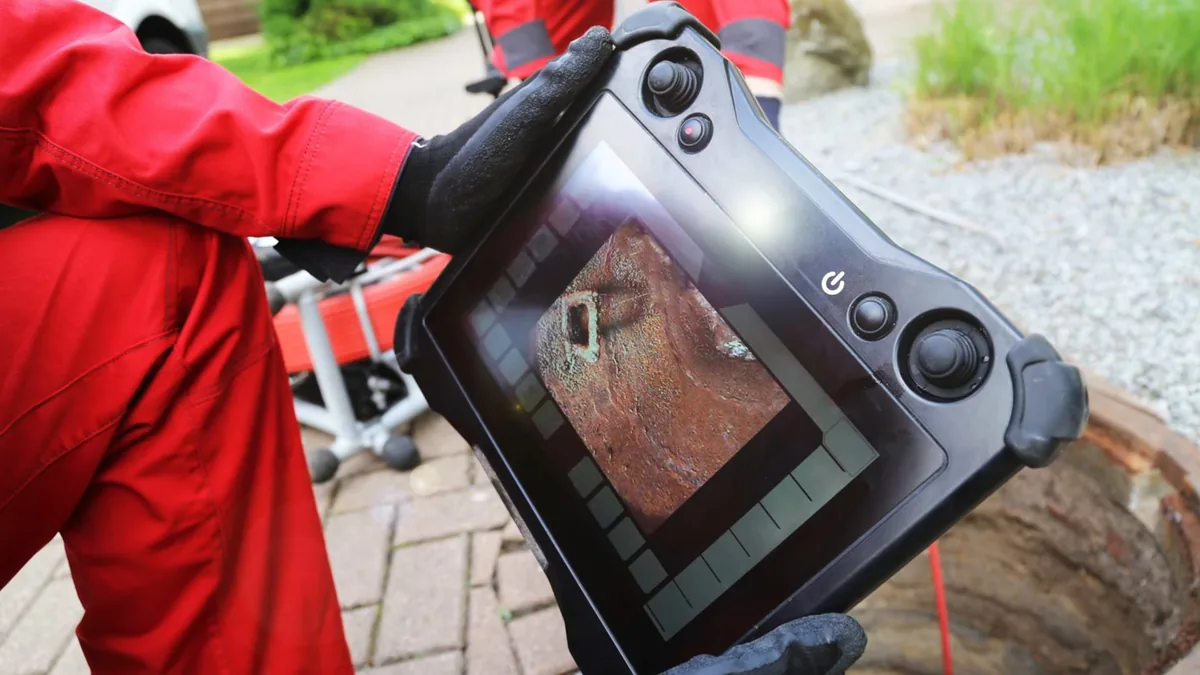
Ownership matters here. Claremont Municipal Code 13.02.010 makes the owner responsible for maintaining the sewer lateral between the building and the city main. The city handles the main itself, so footage showing the exact spot of the break decides who pays. The condition of the existing pipe, cracks versus collapse, sets the repair method. Photos or footage from that pass belong in your hands before you accept a number. For the repair choices, see sewer lateral work.
A sewer camera inspection cost depends on access to a cleanout and the length of line viewed. Sewer line cleaning and hydro jetting of the main line follow the same logic as drain work, only with more pipe involved.
Leak detection and slab leak repair: what moves the cost
Finding a leak is billed by time and method. Time grows with the size of the property and the number of suspect lines, as well as the foundation, the number of floors and the number of lines in the house. Method ranges from meter checks and listening gear to thermal imaging and tracer gas, and the method chosen depends on whether the leak can be reached without opening walls or ground.
Repair choices differ even more. A spot breakout through the slab fixes one failed section, while a PEX reroute replaces the run with new pipe through the walls. How to fix a leaking slab is a choice among those routes, and the cost follows the route. The cost to fix copper pipe under a slab follows the same split, and underground leak detection cost depends on how much ground or concrete has to be scanned. Restoration after repair, meaning flooring, drywall and finishes, can add more than the plumbing itself. Ask whether restoration is in the quote or left to you. The matching service pages are locating the leak and leaks beneath concrete.
Water heater and tankless unit cost drivers
Water heater repair cost depends on which part failed and whether it is stocked, and on the age of the unit. A failed thermostat on a young tank is a repair, and how long a water heater lasts decides much of the rest. Tankless vs tank is a separate question of fuel, venting and fit. The same failure on a tank near the end of its life points to replacement. Replacement price follows tank size and fuel type, whether gas, power vent or electric, and then the code items: an expansion tank, a permit, and any venting correction.
Tankless water heater annual maintenance cost mostly covers flushing scale from the unit. A tankless heater adds three questions. Is the gas supply line large enough, and does the meter have the capacity? Is there room on the electrical panel for an electric unit? Where does the vent run, and where does the condensate drain? Each one can change the scope. California requires strapping on replacement tanks, so confirm it is included, and see heater diagnosis, a replacement heater and tankless heater service.
Repiping, water line and gas line cost drivers
Repipe cost scales with house size, the number of bathrooms and the number of stories, and with access through a crawl space, attic or slab. The choice of pipe material, such as PEX or copper pipe replacement, and the wall repair afterward round out the quote. Any whole-house repiping price range depends on those inputs, and a cost per foot of pipe says little without them. The page on failing pipe repair explains when a repipe makes more sense than patching.
When plumbing pressure is off, a regulator may be the part that needs replacing. A water line between the meter and the house depends on its length and depth, the material replacing it, and whether the work is trenchless or open trench with surface restoration for landscape or a driveway. Who owns which section, the meter side or the house side, and any utility permits can shift the work between parties. California requires 811 notice before excavation, at least two working days ahead.
Gas line cost follows run length, pipe material and the number of appliance connections, plus the pressure test and inspection requirements. A run to a new range costs less than a repaired main run through an old house, and the page on gas line work lists what the test involves.
Fixture and disposal repair cost drivers
Faucet repair cost, toilet repair cost and toilet installation cost make up the least variable group, yet they still swing with which part has failed and whether it is stocked. Replacing a cartridge in a faucet is a different job from replacing a toilet, and a whole fixture can cost more than a part while saving a second visit. The age of the fixture sets the repair-or-replace threshold, and so does the condition of the shutoff valve and supply line under it.
Garbage disposal repair, replacement and installation cost add motor size and the build of the unit, along with any outlet, switch or discharge changes under the sink. A jam is quick to clear, while a leaking housing means a new unit. The pages on fixture work and disposal repair describe each case.
Water damage, softener and commercial cost drivers
Water damage work covers removal and drying. Its cost follows the area affected, the materials soaked and how long drying takes, and moisture readings show when it is done. Mold remediation is outside this site, and mold testing appears only where it is warranted. Photos and a written scope make a claim conversation with your insurer simpler. See water removal and drying.
A softener or filter is priced by system type, capacity and the drain and electrical hookup at the install location. Hardness is the starting number: the Golden State Water 2026 report for the Claremont system gives an average hardness of 190 mg/L, close to 11 grains per gallon, within a wider range across the system. Ask for the current report before sizing equipment, and read treating hard water.
Commercial jobs depend on scope, building size and after-hours access. A restroom repair in a small shop is not the same job as a line replaced in a multifamily building, and the page on business plumbing service lists the usual cases.
Want a quote built from a real look?
Call dispatch, describe the job and ask what the plumber will need to see before a number can be given.
After-hours visits, service calls and stop-gap repairs
Emergency plumber rates and after-hours cost differ from a scheduled visit in availability and in how the visit is billed, and the plumber should explain that before starting. No figures appear here and none are promised. What matters to you is what the visit is meant to accomplish. A temporary stop-gap stops the water or the backup now and leaves the full repair for a planned visit. A full repair at the first visit takes longer and may need parts that are not on the truck.
Asking which one is quoted
Ask which of the two is being quoted, and ask what the stop-gap leaves exposed. A capped line, a bypassed fixture or a patched joint each has a limit, and the plumber should state it. A plumber service call fee, sometimes called a diagnostic fee, may be billed separately from the repair, so ask whether it is credited to the work if you go ahead.
Quote, bid or estimate: what each word means before you sign
The three words get used loosely, and the difference matters. An estimate is a plumber's first read before the work starts and can move once the wall is open. A quote is a stated price for a defined scope. A bid is a quote offered in competition with others, usually on a larger job such as a repipe or a commercial run.
People often ask how much it would cost to pull out 100 feet of old water line, or what the prices are for a whole job. Whether the ask is a quote for hooking it all up, a bid or quotation for a project, an estimate to place a bathtub or shower in a bathroom, or simply the prices for the work, the honest answer starts with a look at the line, its depth, the surface above it and what has to be restored afterward. Prices for your work are set after the look, never before it. Callers just wondering how much it would be for a diagnostic or a service fee should ask the same questions. Ask for the scope in writing, ask which items are priced separately and ask whether a diagnostic or service fee is credited to the work.
Compare quotes by scope, not by total. Two numbers that look far apart often differ in what they leave out, such as the permit, the cleanup or the wall repair after the plumber is done.
Questions to ask before you accept an estimate
- What exactly is included, and what is left out?
- Is a permit needed, and who pulls it? The city permit office on (909) 399-5460 can say what your address needs.
- What happens to the old part, pipe or fixture?
- Is cleanup or wall repair part of this quote?
- If the plumber finds more once the wall is open, how is the change approved?
Written answers beat verbal ones. The plumber who does the job is an independent contractor and responsible for the terms, so keep the quote and any change in writing. The disclaimer page spells out how this site fits in, and the FAQs page covers licenses and permits. Keep photos of the finished work and the old parts if you can, since they help settle questions later.
Ready to get a plumber to look at it?
Call now, give your address, and ask for a plumber serving your area to explain the options before work begins.
- Licensed and insured plumbers
- Same-day service when available
- 24/7 emergency dispatch